Tomorrow… oh, for the fourth… my father is in bad shape with May 1, and the invention… on this occasion… well, he could tell you about his yagé ceremony. Almost nobody knows about this—what I learned from the elders. I’ve known that through the journey, they discovered the medicinal plants—they are the supreme, or better said, the very path of all medicinal plants… the father of all medicinal plants.
One summer, when they were walking, one of them stopped to urinate while the other three went ahead. As they talked, they noticed there was no one around, no people, nothing. As they got closer to the tree, the voice faded. When they were near—just there—the voice stopped. “12,” said Luciano, “how is this?” and he went to look at that tree.
The vine had been soaked in water, and he thought, “This isn’t people… could this juice have the power to talk to plants?” He rushed back to the others and told them. They said, “Keep it safe. When we return, we’ll see, cook it, and try the shoot—to discover its mystery.”
And so it went. They started having visions. It showed him, “I am… I’m called… and those I choose, I follow—to cleanse the stomach, to remove or cure any illness. But we’re missing one,” they said. “There’s another plant—gather the leaves and mix them to prepare and cook.”
The mixture is called “companero de viaje”—companions for the journey. That’s much better, they said. Then he explained: the mystery comes from the gathering, and then the next mystery in the preparation. You must pass it over the fire so that ashes fall on it. That’s why you need good wood. The best is within oneself—how you work after you understand and incorporate it.
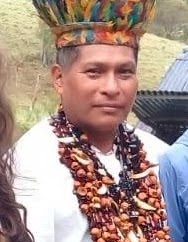
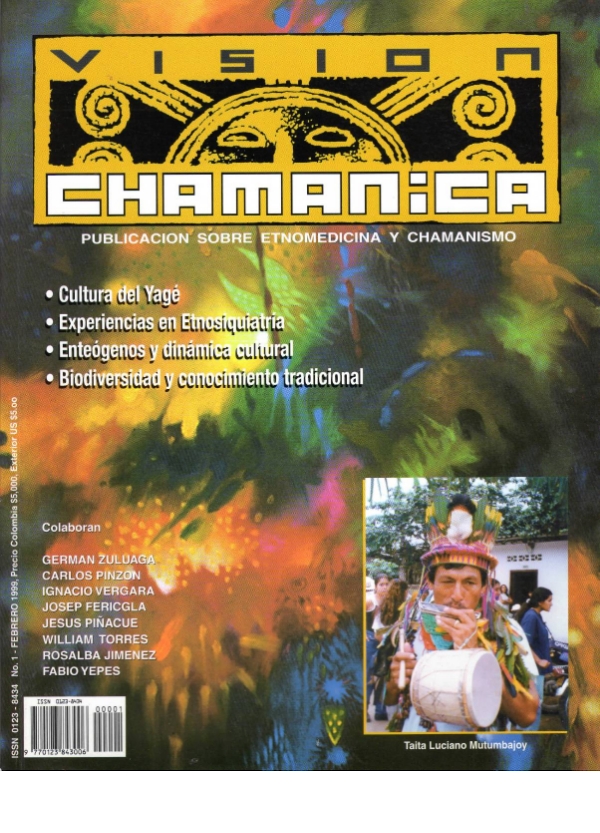
With all love and care, the healers mix it so it looks good—the “pinta” is the vision that it gives. When someone wants to learn to be a healer, they keep taking it. If it suits the child, with time they show it. The previous two healers who knew this plant come out wearing feather crowns, with feathers here by the ear, painted. Then they start with that “guaira,” they learn the songs. After, they serve it: “Take this, get ready, you’re going to work,” they tell you.
When you go deeper, there’s nothing false—it’s all spirits offering. But you don’t know how to manage it until the moment arrives. They take “nerin” and all the curious people begin. Each person has their own style—each with a soul spirit. That “guaira” represents a tool—the plant itself is the journey, it’s there. That’s why if the cook isn’t well in mind, heart, and spirit, the remedy won’t work, and the taitas won't work either. They say, “This cook won’t do.” If someone’s too drunk or with women, better not cook.
Some things need attention—the woman needs time, and the remedy needs time. Then it becomes a responsibility. The Putumayo River is the route of the remedy. It’s like a highway: the taitas move from place to place, and people move by it. That’s why the journey route goes through every town: Puerto Caicedo, Hungría, Garzón, Mocoa, even Secundaria. First time in the water—it can frighten you, so it's better to explain what it's for… the reaction can be strong, so be brave.
“El yagé” is to establish health and purify the blood. Our elders said we contaminate our thoughts and create wars unless we clean ourselves. It’s a space of learning and teaching. My father taught me to learn beautiful things: to love, to wake up, to defend the land. Most land is taken by settler brothers—they have the capital. They came to exploit and deceive people, taking land that is ours. We, born from this root and our values, are in the struggle for respect of our rights and our valley. We don't want their traps, nor do they want ours. We deserve respect and to participate.
If we had been like those colonists Pablo, they would've killed us—they would've destroyed us. But we teach that maintaining a relationship with the earth by planting—active acts called “touchco car pooling”—you find a plot to plant medicine, food. That’s learning: building community here.
“Mañana...” no, sorry. Those who take the remedy talk at night, slightly drunk, about how to achieve what “juega” meant for Indigenous territory before the fumigation came—it dried everything. The poison goes from the leaf to the root, poisoning it. I took the root and buried it— I said, I’ll plant it, and I will work. I planted a small piece to have more yagé. I planted all kinds of plants here to avoid letting them disappear.
We’ve taken remedies many times; we know the struggle will be tough, but sooner or later we must recover our elders’ vision, take remedies—and that’s what reflects this. We’re dealing with battalions, with oil zones, with border projects. We make this known to another world—what we call the Western world—so they see what’s happening here: it’s disrespectful to ancestral territory. The army comes—armed groups also. We’re in the middle of this war, and because we are original, we can’t leave. We must leave our children here—territories are sacred; we care for Mother Earth, but the state doesn’t see that.
We stand firm, saying no more oil exploitation. They wanted to force a well into land I work. They sent soldiers—with them to work. No—they ended up selling them to soldiers who made it worse. But with Taita Marcelino we had an opportunity. We chose one taita to watch over our work. He knows the nature and herbs—he knows everything. He received from Mother Earth those practices. We help protect the plants so they don’t end.
We feel when there's good and evil—we dream. If someone’s overwhelmed, we go to the healer to examine if it's natural illness or evil. If evil, he’ll reconnect them to the journey or the portal. But they come and interview, and innocently we give them details—they steal our cultural vision and leave. I have children in Bogotá, and I go there too. Many put on a crown—buy a crown—and become taitas or healers without being so. Between settlers, they lie and take money. Some abuse the remedy; some mercantile it. This brings consequences and a wrong concept of the remedy.
Today, traditional medicine—the ninth official medicine—healers are now accepted. During the Inquisition, they’d have burned me alive, seen as a witch. I say: the departure of mountain taitas to the city to help humanity is an act of love. They bring the journey to the cities, but there’s no same capacity as in the countryside. It's curious: even Indigenous people fear or feel ashamed of taking the journey—my grandpa Martín Agreda said so. That’s why taitas went to cities to find apprentices. In Pasto, 40 years ago, it was the city that took the most yagé, a strategic point. People from the Pacific came, the Jonas, the Cofáns—and shared yagé there with whites and mestizos. That’s how these communities began to have a presence in the city.
They sought to transform the place they lived, worked, shared. We prefer—with all our heart—that an elder help us in this transformation. At one point we were given permission to take it alone, under a taita’s watch—it’s a totally different experience: facing the vastness of the cosmos alone. It’s like a test from the taitas. They leave you a vial for two months—to see if the student endures.
This is where urban shamanism emerges: no sacred site, no maloca, no land—just your home. You must make the space sacred, transform it. It's a minority movement, a removal of foundational ideas about life—and part of a silent revolution of health and freedom. We face the government: fumigations are wiping out our culture and medicine. We can’t endure it. If the government helped, things would be different. Our country needs healing—from human ignorance, from seeing each other as enemies instead of brothers. We need medicine—and taitas with deep knowledge.
We need to sit and talk with people, with communities. The medicine from the jungle rises—the medicine from the North descends—because in sacred prophecy the condor rises, the great anaconda rises, energy crosses Mayan cross from Tierra del Fuego. It marks four cardinal points, and our chakras—the heart of Pachamama. Cities have negative energies—many illnesses come from that pollution. We have taken the remedy and addressed them. It’s about stabilizing lost energies. In cities, people are individualistic—they forget their brothers and those in need. Dominant society is decadent, lost in internal projects—failed states. Capitalism never managed to create a way to live.
Now, youth are dissatisfied with their impoverished worldview—they may have economic, military, or academic power, but no philosophical or spiritual power. That internal work they lack—Indigenous have had forever. Yagé is medicine for spirit, soul, and body—it’s divine, way beyond our imagination or language.
We must cleanse—we can be cured by doctors or medicine or drugs, but medicine only goes so far. It can’t cross astral planes where diseases hide. Belonging to a lost civilization and planet, other civilizations avoid us, not wanting contact—they don’t want to destroy us. It’s terrible, but coca consumption persists worldwide—whiskey, cars, CNN— it’s madness.
The sensibilization project is destructive. Yagé offers reconnection to nature and inner world—great wisdom from the heart. Not everyone can go to jungle locations, so we bring it to cities—but with care, to heal people, as elders taught us. Going away—“rompuy”—means leaving your land to get resources. We leave the community—but we heal while learning from the plant spirits, who teach songs; songs are part of the healing, part of design.
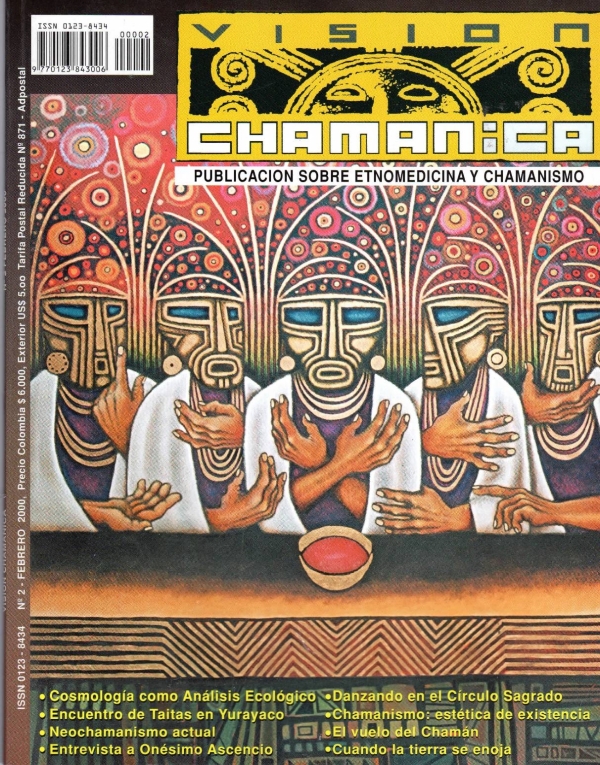
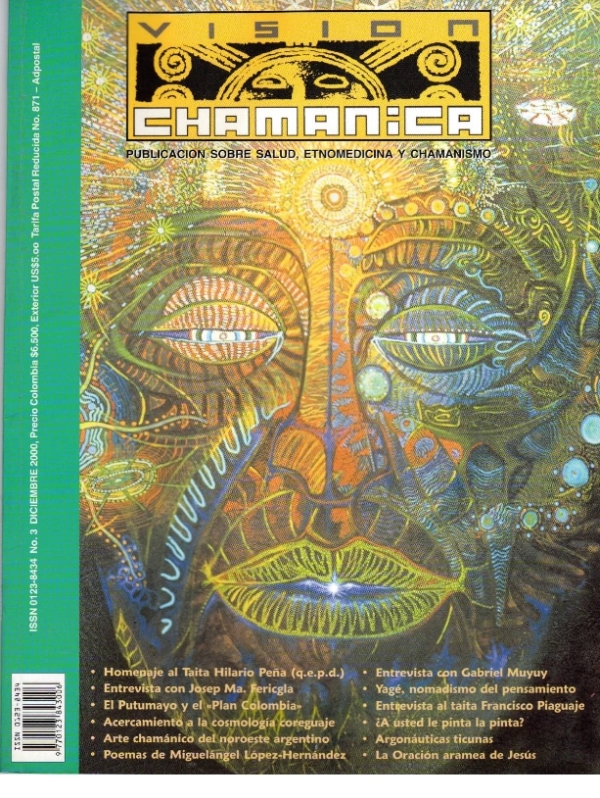
Shamans ascend to the spirit world under yagé—they sing with spirits, and their songs become designs that cover the person like an aura. Illness is a distortion of that design, so the song puts it right. Sometimes they invoke the hummingbird: its wings produce music that restores the design. So therapy is deeply tied to aesthetics.
“Yes, papa, yes… the dance of nausea—this vertigo of impending vomiting… you see yourself unfold in infinite mirrors, face the immensity of the tradition… it bursts from you—vomit outs from fingertips, nose, ears, crown, until you become a squirting porcupine… a filthy fountain… full of yourself… you don’t even recognize your vomit. This is the reverse of capital—the head, decapitalization. The yagé experience is decapitalization. It’s service—healing people. The idea is that people awaken natural consciousness—to be better human beings in the city.”
“We’ll take it, my friend… tipsy… wisdom from knowledge… we’ll use our bodies to relive reality, to relive life. To understand that, we must enter that state—a ‘chuma,’ a drunkenness of 17—drunkenness of purification.”